Open post
ChatGPT Ads are here

ChatGPT Ads are here: What advertisers need to know.

ChatGPT Ads are here.

What advertisers need to know about OpenAI’s new platform.

New York, NY — May 27 - 2026

ChatGPT ads are here.

OpenAI has officially opened access to its self-serve advertising platform, and Green Line has been accepted to begin testing.

As AI changes how businesses connect with customers, this early access lets us explore a new ad channel right out of the gate. We are figuring out how ad creation, optimization, and the algorithm works so we can bring those direct insights straight to our clients.

A few quick logistics on how it works today.

The original minimum spend requirement is gone, though you still have to go through a verification process before launching campaigns.

Right now, the platform supports national, regional, and limited DMA targeting within the United States, Canada, Australia, and New Zealand.

You can choose between two main campaign objectives: reach and clicks. You can set up conversion events for tracking and reporting, but optimizing directly toward conversions isn't an option yet, though we expect that to roll out soon. It's also worth noting that the platform doesn't support daily budgets right now. Instead, it operates entirely on total campaign budget limits.

The targeting mechanism is where it gets interesting.

Instead of relying on traditional audience parameters, you provide contextual hints to help guide the algorithm on when to serve your ads. These hints need to be detailed, solution-oriented, and focused on the specific problems your audience is trying to solve. Think of it like using ChatGPT itself - the more context and relevance you feed it, the better the output. Your ad copy should follow that exact same logic, aligning tightly with user intent and search context.

About Green Line Digital.

We’re glad to be part of the early adopters and are excited to see how this tech can build new opportunities, especially for our ecom and lead gen clients.


This platform is going to evolve fast, contact us to stay in the loop.

Open post
The future of AI.

The Future of AI.

The Future of AI.

The future of AI

Google I/O 2026 key takeaways and what that means for your business.

2026 has only brought more questions when it comes to AI and its effect on SEO. With tools like ChatGPT and Claude shaking up how users find information, Google has stepped up to the plate, showcasing its plans both long-term and short-term in its efforts to take control of this new space. We are here to quell some concerns you may have about these new changes, navigate this new landscape and determine what course of action is best for your business.

Google SERPs are pivoting.

Google has announced its biggest changes to its search box in almost 25 years. Powered by Gemini Flash 3.5, Google will have a better understanding of your searches and use them against future inquiries you may have in its platforms. Users will become more defined in the Google ecosystem, making personalization the most sophisticated it has ever been.

These changes have accelerated the shift in how we view the results of search engine optimization. Previously, we focused solely on clicks and having users come to the site from a traditional search engine. In today’s AI-forward landscape, we’re now considering brand authority, reputation and visibility as primary factors in a successful optimization. SEO no longer covers Google’s ten blue links — it expands to AEO/GEO, where we’re monitoring how often LLMs are mentioning businesses as well as their sentiment surrounding the business. The traditional SEO principles of clear, correct data within text, brand and domain authority, text addressing user’s questions and needs will remain just as important, if not even more important, in this new landscape.

Meet Spark - Google’s new “Assistant”.

Google has started spending billions of dollars on creating tech geared towards providing more context around what a user is searching. This is where Gemini Spark comes in. This tool will act like an “assistant,” running in the background and helping you perform tasks that may require more time than you envision.

Some potential tasks Gemini Spark could help you and your business with:

  • Providing notifications to you if a customer reaches out with inquiries.
  • Navigating large projects and helping you break them down step-by-step in a more efficient manner.
  • Pulling information from Google Docs/Slides/Sheets into responses you need quickly.
What does this mean for your business.

It is understandable if these changes might make your head buzz. Not to worry! Our experts are here to provide some guidance with starting points toward your journey with SEO:

  • SEO is Not Dead, It Just Got a New Name - Foundational SEO Best Practices remain key, and now are referred to as AEO/GEO! These AI-powered engines still need to pull information from your site. Non-optimized content and metadata (among other things) devalue site authority, holding us back from optimal performance.
  • Short-Term vs. Long-Term Strategy - Things can be very volatile in the SEO world. What works one day may not be the case in the near future. The key to top-performing strategies is maintaining consistent updates to the site. If any large changes need to be made, work with our SEO specialists to ensure your long-term strategy aligns with business goals.
  • Content Remains King - Content needs to be as up-to-date, thorough and accurate as possible. New tools do not just pull information from thin air. They are looking for quality information it can pull to help its users as thoroughly and efficiently as possible.

In this updated SEO/AI landscape, it is important that you partner with an agency that understands your needs and how this landscape is changing to achieve the highest-level results. Our specialists at Green Line Digital are ready to work with you to achieve these results. Contact us today to begin your partnership!

Open post
Website tracking consent man on computer

Website Tracking Consent

Website tracking consent.

May - 2026

We have all seen them by now. Visit any website and you likely have encountered frequent prompts requesting consent for cookie-based tracking. These banners are increasingly prevalent and significantly influence how advertisers monitor their campaigns. This article examines the legislative origins of these prompts, the necessity of maintaining a compliant cookie consent banner, and technical strategies for integrating website tracking with such consent mechanisms.

Q1 2026 paid social update woman holding phone

The emergence of these banners is driven by evolving legal frameworks that mandate website operators obtain explicit authorization before tracking user browsing behavior.

Historically, it was standard practice for websites to deploy small code segments, or cookies, to browsers upon every visit. These cookies functioned as unique identifiers, enabling advertisers to monitor users across multiple platforms and deliver targeted ads based on aggregated browsing data.

This landscape shifted fundamentally with the introduction of major privacy regulations, including the General Data Protection Regulation (GDPR) for European Union residents and the California Consumer Privacy Act (CCPA) for California residents. These consumer protection mandates require website owners to secure user permission before activating tracking cookies, necessitating the implementation of consent banners.

The law.

While the legislation can vary from region to region, the underlying principle remains consistent: organizations must inform users of tracking technologies and provide a clear mechanism for opting out of such data collection.

Given the ongoing increase of privacy-focused legislation, website owners are advised to implement formal consent banners. It is critical to note that the presence of a banner is insufficient; tracking scripts must be suppressed until affirmative user consent is received.

Several methodologies exist for achieving compliance.

Our agency utilizes Google Tag Manager in conjunction with Google Consent Mode. This architecture provides a standardized communication layer that enables the consent banner to interface with Google Tag Manager, dynamically adjusting tag execution based on individual user preferences. This approach ensures that client properties remain compliant with regulatory requirements while preserving tracking capabilities for consenting users.

Implementing a compliant consent mechanism often results in a measurable impact on data collection. In our experience, websites suffer a 20-30% reduction in trackable user data following the deployment of a properly configured banner. Although this decrease is significant, the risk of substantial financial penalties for non-compliance with consumer privacy far outweighs the risk of failing to comply with these regulations. Our philosophy here at Green Line Digital is that respecting consumer privacy preferences is a strategic imperative that fosters long-term brand integrity beyond the metrics provided by cookies.

Open post
Q1 2026 paid social update woman holding phone

Q1 2026 Paid Social Update

Q1 2026 paid social update.

April - 2026

We’ve been tracking a few updates across Meta and TikTok that are worth keeping an eye on. As these platforms lean harder into automation, the challenge is finding the balance between letting the machine do its thing and maintaining enough control to actually hit your goals.

Q1 2026 paid social update woman holding phone

Here’s a breakdown of what’s changing and why it matters for your accounts.
Meta updates.

Push delivery.

Meta is rolling out a feature that lets you force spend toward specific ads within a consolidated ad set. Usually, Meta’s algorithm picks a winner early and puts all the budget there, which makes testing new creative difficult. This should help level the playing field. The real test will be seeing if forcing spend on ads Meta would otherwise ignore actually helps performance or just creates more expensive clicks.
The bottom line: You get better control over new ad tests and limited-time offers without having to break your account structure apart.

Customer life cycle strategy.

There’s a slower rollout happening for a feature focused on new customer acquisition. It essentially tells Meta to prioritize people who haven’t bought from you before. While this might make your initial cost per result look higher on paper, it’s a smart move if you’re focused on true incrementality and filling the top of the funnel.
The bottom line: It’s a solid alternative for brands where standard incremental attribution models don’t quite fit.

Whatsapp for business.

Meta is making a massive push for WhatsApp adoption (it hit 100 million monthly users in the US recently). While this isn’t a direct paid media play yet, the utility for brands is growing. If you’re on Shopify, the integration is simple and works well for order updates and customer notifications.
The bottom line: It’s a low-hanging fruit for improving customer experience and keeping people engaged with the brand.

TikTok updates.

Smart+ 2.0 automation.

TikTok is evolving its Smart+ campaigns into something much more flexible. It used to feel like a "black box," but the new updates allow you to toggle automation across targeting, bidding, and creative. You can now see more clearly which creative combinations are actually doing the heavy lifting.
The bottom line: You get the benefits of TikTok’s AI without giving up total control, making it easier to scale what’s working.

Creative optimization enhancements.

They’ve also improved how the platform identifies winning assets. The system is getting faster at testing multiple pieces of creative and rotating them based on real-time signals like watch time and engagement.
The bottom line: This cuts down the time it takes to find a winning ad. What used to take weeks of manual testing can now happen in near real-time.

TikTok market scope.

A new update to Market Scope lets you see TikTok Shop performance right next to your traditional funnel metrics. Having everything in one interface makes it much easier to see the path from discovery to purchase.
The bottom line: Better measurement means you can make budget decisions based on the full journey rather than guessing how the Shop side of things is impacting the rest of the business.

The paid social landscape changes fast, and it’s easy to get buried in the updates. We’re digging into these now to see which ones make the most sense for your specific strategy. Let us know if you want to dive deeper into any of these.

Open post
The complete guide to Apple Maps and local seo in 2026.

The complete guide to Apple Maps and local seo in 2026

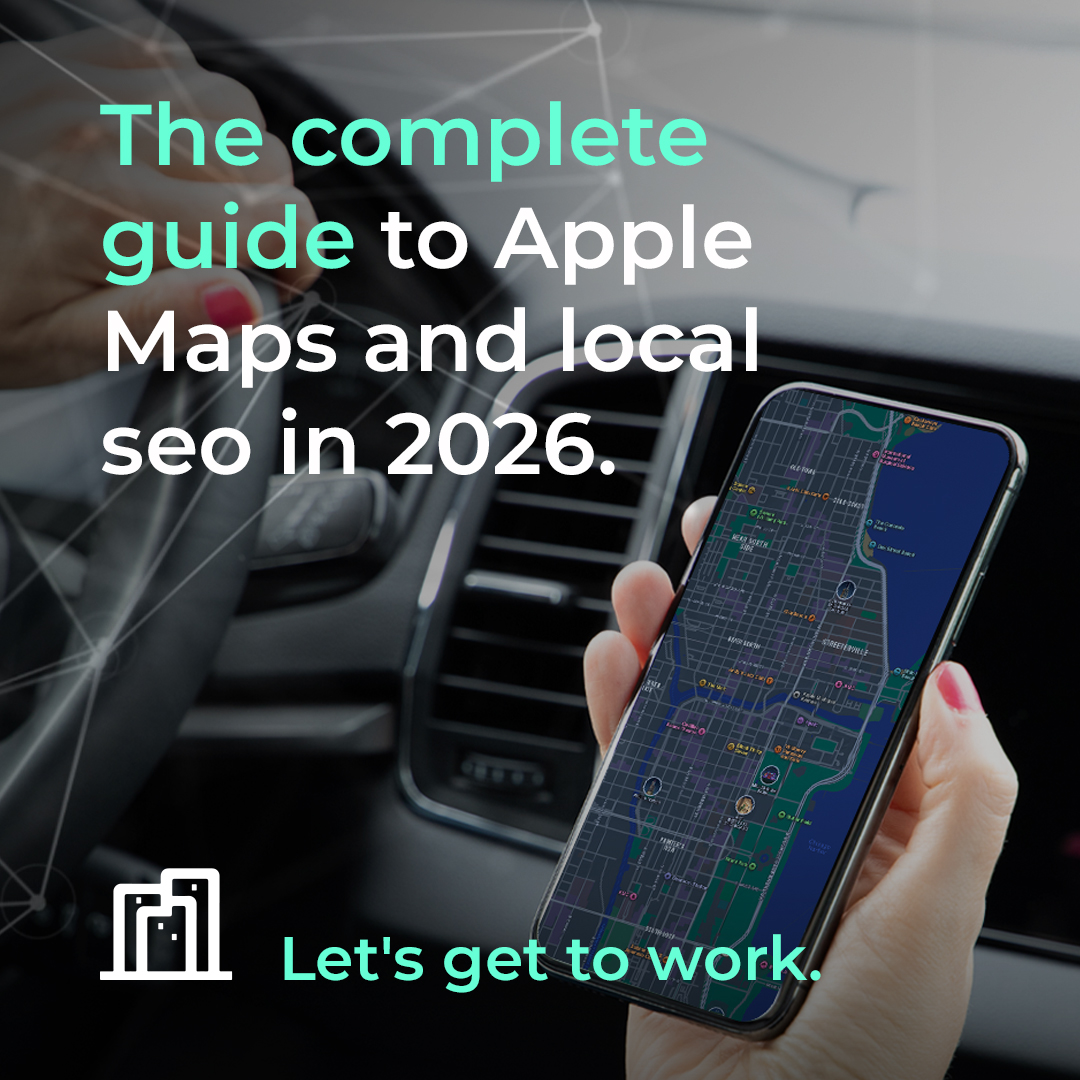
The complete guide to Apple Maps and local seo in 2026.

March 1 - 2026

Apple Maps isn't just a way to find the nearest coffee shop anymore. It’s evolved into a full-blown discovery ecosystem that dictates how people find your business, weigh their options, and decide where to spend their money.

With Apple Business Connect expanding and iOS 26 weaving Maps deeper into the iPhone experience, this platform is now a mandatory pillar of any local SEO strategy. If you aren't managing your Apple presence with the same rigor as your Google profile, you’re leaving a massive amount of traffic on the table.

The complete guide to Apple Maps and local seo in 2026.

Why apple maps is a local seo powerhouse.

Most people default to thinking about Google when they hear "SEO." But consider how often a customer actually interacts with Apple’s ecosystem:

Apple devices own a giant slice of the mobile market. If your listing is messy, unverified, or non-existent, you aren't just invisible on a map—you’re invisible to Siri and the entire iOS search layer.

  • Siri Searches: "Hey Siri, find a florist near me."
  • In-app Discovery: Tapping a location inside an iMessage or a calendar invite.
  • Native Navigation: The default experience for millions of CarPlay users every day.

Apple devices own a giant slice of the mobile market. If your listing is messy, unverified, or non-existent, you aren't just invisible on a map—you’re invisible to Siri and the entire iOS search layer.

The apple business connect hierarchy.

Apple uses a specific three-tier structure to organize data. Getting this right is the difference between a clean search result and a fragmented mess.

Company:

Your legal business entity.

Brand:

The name the public knows.

Location:

The physical storefront or office.

For enterprise brands with dozens or hundreds of locations, this structure is your best friend. It allows you to push updates centrally, keep your logos consistent, and make sure Apple’s algorithm sees your locations as authoritative branches of a single, trusted brand.

The fundamentals of visibility.

Local SEO on Apple Maps follows many of the same "back-to-the-napkin" logic rules as traditional search, but with a few specific priorities:

Nap Consistency:

Your Name, Address, and Phone number need to be identical across your website, Apple Maps, and other directories. If Apple sees a different phone number on your site than what's in Business Connect, it creates friction in the algorithm.

Categories & Services:

Don’t just pick the closest match. Be specific. Proper categorization tells Apple exactly which searches you should "win."

The Trust Factor (hours and visuals):

Nothing kills a lead faster than "Permanently Closed" or "Opening Soon" when a customer is standing in your parking lot. Keep your holiday hours updated and use high-quality photos of your storefront so people know what to look for.

See where your visibility gaps may be >

What's changing with IOS 26.

The latest iOS update makes Maps more proactive. It’s no longer just waiting for you to ask for directions; it’s suggesting smarter routes and integrating more deeply with other apps. This means your location data is being "read" by the OS more frequently than ever. Clean data isn't just for the map anymore—it’s for the entire user experience.

The arrival of search ads.

All signs point to Apple launching search ads inside Maps this year. This is a "first-mover" moment. Just like when Google local service ads first launched, the businesses that already have their listings claimed, optimized, and structured are going to be the ones positioned to capitalize on paid placements immediately.

Your 2026 apple maps checklist.

To keep your local SEO ahead of the curve, here is what needs to happen now:

Verify everything:

Use Apple Business Connect to claim every single location.

Audit your data:

Check for "zombie listings" or old addresses that haven't been purged.

Visual refresh:

Upload new, high-res photos and ensure your brand logos are current.

Monitor the ad space:

Be ready to test search ads as soon as they go live in your region.

Apple Maps is no longer a secondary concern. It’s a primary discovery tool. Treating it as an afterthought is a strategy that’s going to get very expensive, very quickly.

Open post
February 2026 Google & AI advertising updates: what brands need to know.

February 2026 Google Ads Updates

February 2026 Google & AI advertising updates: what brands need to know.

February 19 - 2026

Digital advertising keeps shifting, and the latest updates from Google and OpenAI give us a pretty clear look at where the puck is headed. We are seeing changes that put AI front and center in how consumers find brands... often long before they even think to type a standard search query.

February 2026 Google & AI advertising updates: what brands need to know.

But look, if you try to react to every single update that rolls out of Silicon Valley, you are going to drive yourself crazy.

The trick is figuring out which of these actually matter right now, which ones to just keep an eye on, and how they actually impact your hard earned cashola.

Ads in OpenAI and ChatGPT are actually happening.

OpenAI is starting to test ads inside ChatGPT for logged-in users on their free tiers. They will show up at the bottom of responses if they are relevant to a sponsored product or service. OpenAI swears up and down that these ads will not influence the organic answers. We will see how long that lasts.

So what should you do right now?

Absolutely NOTHING. There is currently no way to self-enroll, and we have ZERO details on targeting or reporting.

But this is a massive signal. Discovery is moving way beyond the standard search engine results page. Getting sponsored visibility inside an AI tool might eventually become the best way to reach high-intent users while they are still just researching.

Google lowers the floor on audience sizes.

This one is actually a big deal. Google just dropped the minimum audience size requirements across Search, Display, and YouTube. You can now activate segments with as few as 100 users. That is a huge drop from the old 1,000 user threshold for remarketing and customer match lists.

Why should you care? Because it fundamentally changes the economics of your first-party data. You no longer need a massive list of past purchasers to start seeing a return. Think about it like lowering your golf handicap...you get to play the precision game much sooner. If you only need 100 users instead of 1,000, you can start targeting folks who abandoned a high-ticket cart way faster. You can launch hyper-niche remarketing campaigns even if your site traffic is not breaking records, and test highly targeted segments without waiting around for months for the list to build up to a four-figure size.

Demand gen gets more toys.

Google is still pouring money into Demand Gen, making it a massive part of a full-funnel strategy.

A couple of new things caught my eye here. First, Shoppable CTV. People can now browse and buy your products directly while watching YouTube on their connected TVs. Second, a Brand Search Attribution Beta. This is a measurement tool that shows exactly how your Demand Gen campaigns are driving branded search volume (though you have to beg a Google rep to turn this on for you right now).

These updates prove Demand Gen is growing up. It is not just about cheap awareness anymore. It is about capturing attention in immersive environments and driving real, incremental conversions before people even hit your search campaigns.

YouTube creator partnerships get easier.

Google also rolled out a new Creator Search and Management Hub. Historically, trying to scale creator partnerships on YouTube has been like trying to wire a smart-home switch without turning off the breaker... painful and slightly risky.

Now, it is much easier to find creators in your specific niche and test out authentic video content. You essentially get to borrow some of their hard-earned trust with their communities. This opens the door for a video-first approach that actually prioritizes human connection over standard display banners.

What should your brand do now?

At Green Line Digital, our focus is using marketing technology to better manage and activate paid media. We founded this agency in 2016 because we realized even the best brands struggle to keep up with the lightning-fast rate of change in today's marketing tech stack. Across all these February updates, it is obvious that advertising is getting more flexible and heavily focused on the upper funnel.

So get your tracking house in order so you are ready when these AI channels fully open the floodgates. Leverage that first-party data with the new lower thresholds to grab some early wins.

Are you going to sit around and wait to see what happens, or are you going to test these new formats before your competitors even realize they exist?