Open post
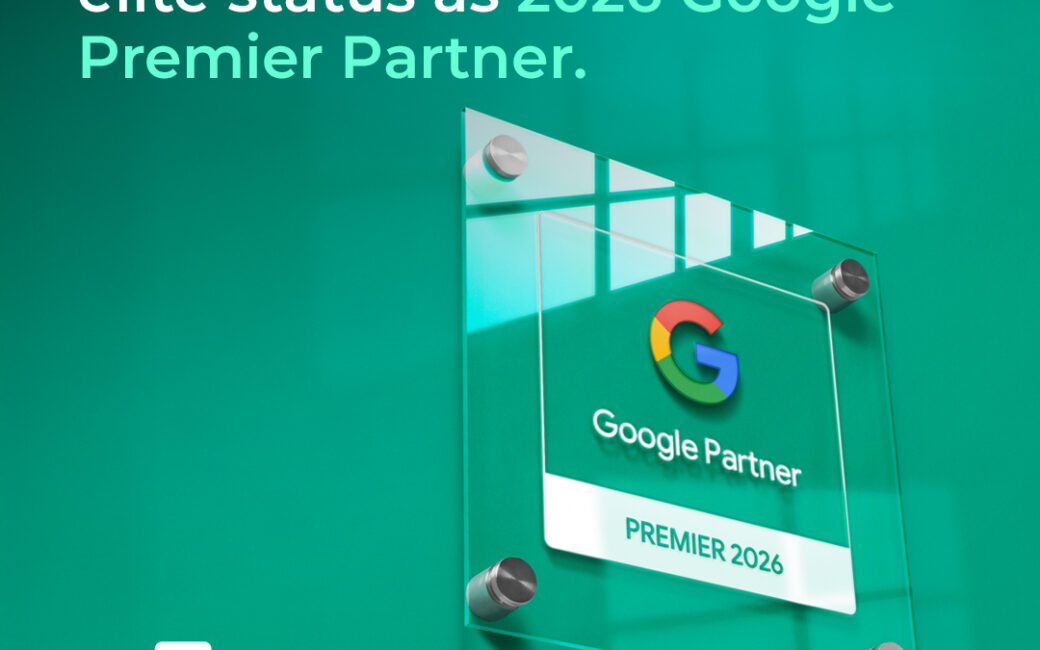
Green Line Digital solidifies elite status as 2026 Google Premier Partner.

Green Line Digital Solidifies Elite Status as 2026 Google Premier Partner

Green Line Digital solidifies elite status as 2026 Google Premier Partner.

For Immediate Release
New York, NY — February 26 - 2026

Green Line Digital, a leading digital growth agency, is proud to announce it has achieved 2026 Premier Partner status in the Google Partners program. Since 2018, Green Line Digital has been recognized among the top 3% of Google Partners in the United States, a distinction that underscores the agency’s ability to drive exceptional results for its clients through Paid Search.
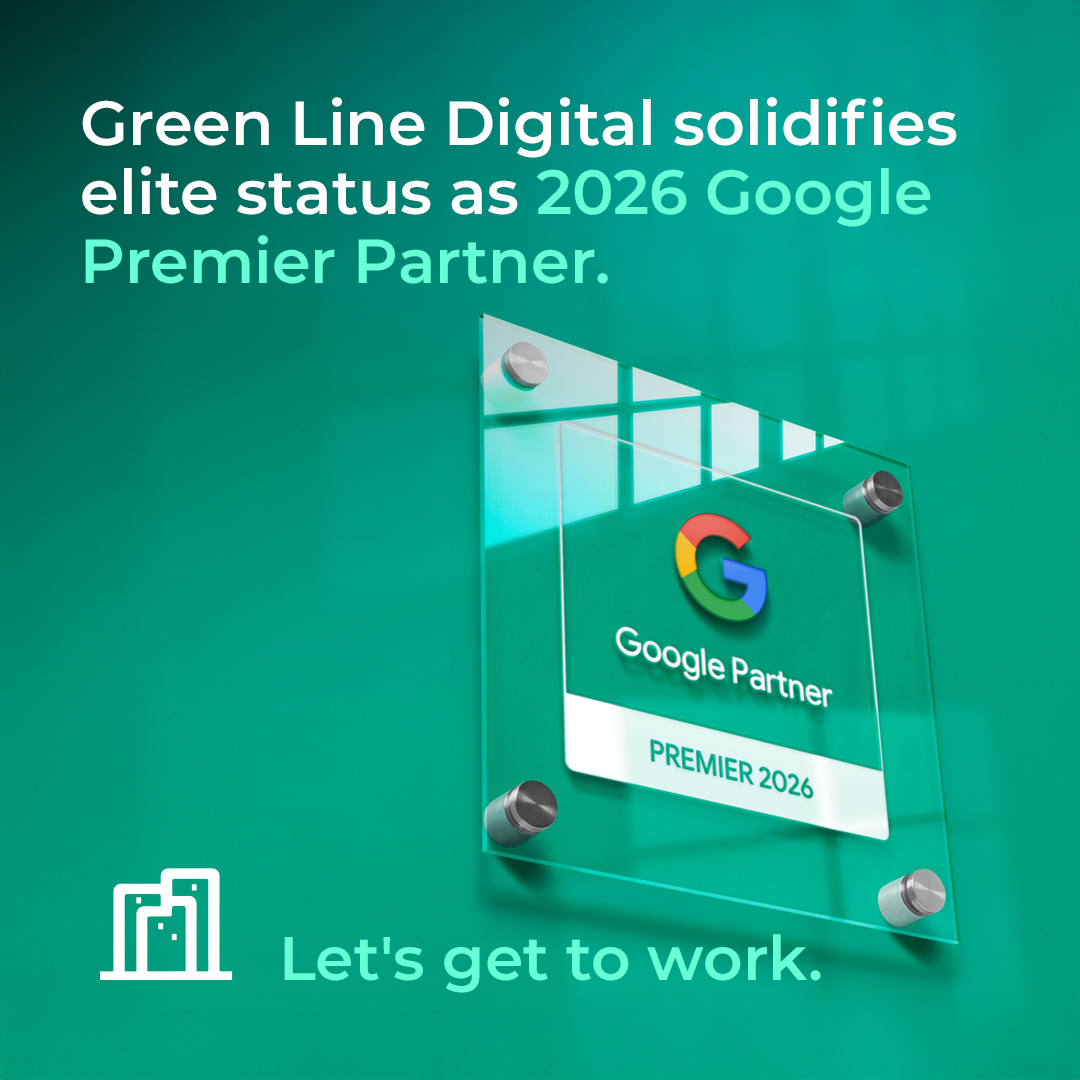
Green Line Digital solidifies elite status as 2026 Google Premier Partner.

The Google Premier Partner status is reserved for companies that demonstrate the highest levels of ad proficiency, meet rigorous spend requirements, and, most importantly, deliver consistent client growth.

The Google Premier Partner status is reserved for companies that demonstrate the highest levels of ad proficiency, meet rigorous spend requirements, and, most importantly, deliver consistent client growth.

"Maintaining our Premier Partner status into 2026 is a testament to our team's relentless pursuit of excellence," said Steve Jurken, Co-Founder and Partner of Green Line Digital. "In an era where digital advertising is more complex than ever, being in the top 3% allows us to offer our clients early access to Google’s latest innovations and executive-level insights that other agencies simply can't provide."

As a Premier Partner, Green Line Digital continues to leverage exclusive benefits, including:

  • Executive Experiences: Direct access to Google’s thought leadership and business coaching.
  • Advanced Insights: Annual industry reports to stay ahead of market trends.
  • Dedicated Support: Specialized account recommendations to optimize ROI for diverse client portfolios.
About Green Line Digital.

Green Line functions as your elite in-house partner, transforming complex algorithms and data science into measurable market leadership. We don't just manage media; we advocate for your vision, turning challenger brands into industry icons through radical transparency and full-service expertise. From Search Engine Optimization ready for AI to a comprehensive cross-channel digital strategy, Green Line is committed to transparency and measurable dealer growth.


Media Contact:
Email: info@greenline.nyc
Phone: (646) 396-0702
Website: https://greenline.nyc/
Facebook: @gldagency / https://www.facebook.com/gldagency
Open post
The complete guide to Apple Maps and local seo in 2026.

The complete guide to Apple Maps and local seo in 2026

The complete guide to Apple Maps and local seo in 2026.

March 1 - 2026

Apple Maps isn't just a way to find the nearest coffee shop anymore. It’s evolved into a full-blown discovery ecosystem that dictates how people find your business, weigh their options, and decide where to spend their money.

With Apple Business Connect expanding and iOS 26 weaving Maps deeper into the iPhone experience, this platform is now a mandatory pillar of any local SEO strategy. If you aren't managing your Apple presence with the same rigor as your Google profile, you’re leaving a massive amount of traffic on the table.

The complete guide to Apple Maps and local seo in 2026.

Why apple maps is a local seo powerhouse.

Most people default to thinking about Google when they hear "SEO." But consider how often a customer actually interacts with Apple’s ecosystem:

Apple devices own a giant slice of the mobile market. If your listing is messy, unverified, or non-existent, you aren't just invisible on a map—you’re invisible to Siri and the entire iOS search layer.

  • Siri Searches: "Hey Siri, find a florist near me."
  • In-app Discovery: Tapping a location inside an iMessage or a calendar invite.
  • Native Navigation: The default experience for millions of CarPlay users every day.

Apple devices own a giant slice of the mobile market. If your listing is messy, unverified, or non-existent, you aren't just invisible on a map—you’re invisible to Siri and the entire iOS search layer.

The apple business connect hierarchy.

Apple uses a specific three-tier structure to organize data. Getting this right is the difference between a clean search result and a fragmented mess.

Company:

Your legal business entity.

Brand:

The name the public knows.

Location:

The physical storefront or office.

For enterprise brands with dozens or hundreds of locations, this structure is your best friend. It allows you to push updates centrally, keep your logos consistent, and make sure Apple’s algorithm sees your locations as authoritative branches of a single, trusted brand.

The fundamentals of visibility.

Local SEO on Apple Maps follows many of the same "back-to-the-napkin" logic rules as traditional search, but with a few specific priorities:

Nap Consistency:

Your Name, Address, and Phone number need to be identical across your website, Apple Maps, and other directories. If Apple sees a different phone number on your site than what's in Business Connect, it creates friction in the algorithm.

Categories & Services:

Don’t just pick the closest match. Be specific. Proper categorization tells Apple exactly which searches you should "win."

The Trust Factor (hours and visuals):

Nothing kills a lead faster than "Permanently Closed" or "Opening Soon" when a customer is standing in your parking lot. Keep your holiday hours updated and use high-quality photos of your storefront so people know what to look for.

See where your visibility gaps may be >

What's changing with IOS 26.

The latest iOS update makes Maps more proactive. It’s no longer just waiting for you to ask for directions; it’s suggesting smarter routes and integrating more deeply with other apps. This means your location data is being "read" by the OS more frequently than ever. Clean data isn't just for the map anymore—it’s for the entire user experience.

The arrival of search ads.

All signs point to Apple launching search ads inside Maps this year. This is a "first-mover" moment. Just like when Google local service ads first launched, the businesses that already have their listings claimed, optimized, and structured are going to be the ones positioned to capitalize on paid placements immediately.

Your 2026 apple maps checklist.

To keep your local SEO ahead of the curve, here is what needs to happen now:

Verify everything:

Use Apple Business Connect to claim every single location.

Audit your data:

Check for "zombie listings" or old addresses that haven't been purged.

Visual refresh:

Upload new, high-res photos and ensure your brand logos are current.

Monitor the ad space:

Be ready to test search ads as soon as they go live in your region.

Apple Maps is no longer a secondary concern. It’s a primary discovery tool. Treating it as an afterthought is a strategy that’s going to get very expensive, very quickly.

Open post
February 2026 Google & AI advertising updates: what brands need to know.

February 2026 Google Ads Updates

February 2026 Google & AI advertising updates: what brands need to know.

February 19 - 2026

Digital advertising keeps shifting, and the latest updates from Google and OpenAI give us a pretty clear look at where the puck is headed. We are seeing changes that put AI front and center in how consumers find brands... often long before they even think to type a standard search query.

February 2026 Google & AI advertising updates: what brands need to know.

But look, if you try to react to every single update that rolls out of Silicon Valley, you are going to drive yourself crazy.

The trick is figuring out which of these actually matter right now, which ones to just keep an eye on, and how they actually impact your hard earned cashola.

Ads in OpenAI and ChatGPT are actually happening.

OpenAI is starting to test ads inside ChatGPT for logged-in users on their free tiers. They will show up at the bottom of responses if they are relevant to a sponsored product or service. OpenAI swears up and down that these ads will not influence the organic answers. We will see how long that lasts.

So what should you do right now?

Absolutely NOTHING. There is currently no way to self-enroll, and we have ZERO details on targeting or reporting.

But this is a massive signal. Discovery is moving way beyond the standard search engine results page. Getting sponsored visibility inside an AI tool might eventually become the best way to reach high-intent users while they are still just researching.

Google lowers the floor on audience sizes.

This one is actually a big deal. Google just dropped the minimum audience size requirements across Search, Display, and YouTube. You can now activate segments with as few as 100 users. That is a huge drop from the old 1,000 user threshold for remarketing and customer match lists.

Why should you care? Because it fundamentally changes the economics of your first-party data. You no longer need a massive list of past purchasers to start seeing a return. Think about it like lowering your golf handicap...you get to play the precision game much sooner. If you only need 100 users instead of 1,000, you can start targeting folks who abandoned a high-ticket cart way faster. You can launch hyper-niche remarketing campaigns even if your site traffic is not breaking records, and test highly targeted segments without waiting around for months for the list to build up to a four-figure size.

Demand gen gets more toys.

Google is still pouring money into Demand Gen, making it a massive part of a full-funnel strategy.

A couple of new things caught my eye here. First, Shoppable CTV. People can now browse and buy your products directly while watching YouTube on their connected TVs. Second, a Brand Search Attribution Beta. This is a measurement tool that shows exactly how your Demand Gen campaigns are driving branded search volume (though you have to beg a Google rep to turn this on for you right now).

These updates prove Demand Gen is growing up. It is not just about cheap awareness anymore. It is about capturing attention in immersive environments and driving real, incremental conversions before people even hit your search campaigns.

YouTube creator partnerships get easier.

Google also rolled out a new Creator Search and Management Hub. Historically, trying to scale creator partnerships on YouTube has been like trying to wire a smart-home switch without turning off the breaker... painful and slightly risky.

Now, it is much easier to find creators in your specific niche and test out authentic video content. You essentially get to borrow some of their hard-earned trust with their communities. This opens the door for a video-first approach that actually prioritizes human connection over standard display banners.

What should your brand do now?

At Green Line Digital, our focus is using marketing technology to better manage and activate paid media. We founded this agency in 2016 because we realized even the best brands struggle to keep up with the lightning-fast rate of change in today's marketing tech stack. Across all these February updates, it is obvious that advertising is getting more flexible and heavily focused on the upper funnel.

So get your tracking house in order so you are ready when these AI channels fully open the floodgates. Leverage that first-party data with the new lower thresholds to grab some early wins.

Are you going to sit around and wait to see what happens, or are you going to test these new formats before your competitors even realize they exist?